From Service Delivery to Service Experience
A service design perspective for human services
Organisations delivering human services operate in complex environments. Reform, regulatory requirements, workforce pressures, high workloads, constrained margins and rising costs all shape how services are delivered.
The challenge is not simply how to meet regulatory requirements or improve individual processes. It is how all these elements come together to create a service that works for the person receiving it, the people supporting them, the workforce delivering it and the organisation responsible for enabling it.
There is also an inherent tension. Standardisation is necessary. It enables organisations to operate efficiently, consistently and at scale. But people don't experience their needs as standard. This is where a service design lens can help.
Is service design another buzzword?
I describe service design as the practice of shaping services and experiences within an organisation's operating model. It connects people, process and technology to translate strategy, reform, policy and organisational intent into everyday experiences and practical service delivery.
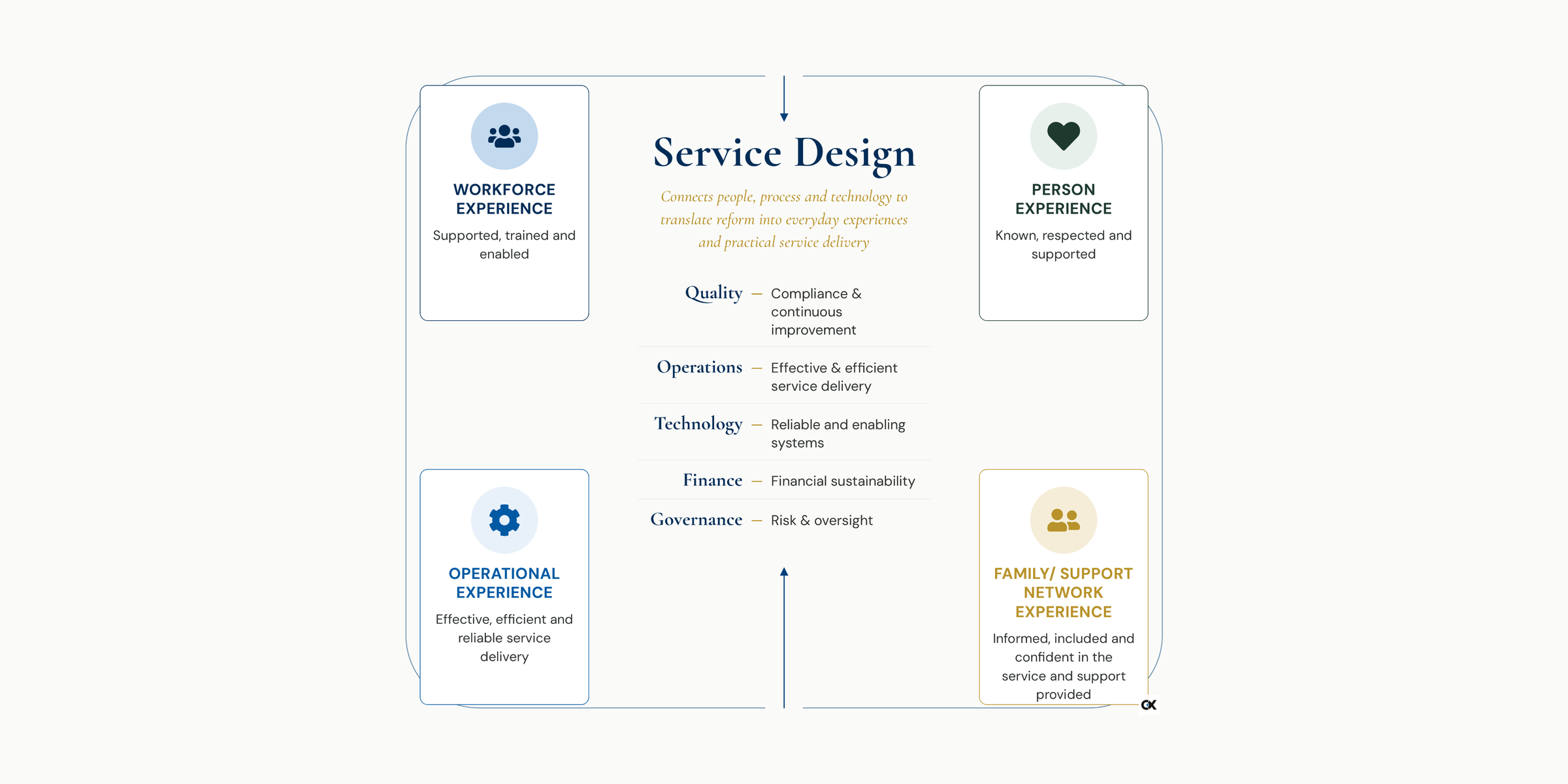
At the core are the organisational functions that enable service delivery: Quality, Operations, Technology, Finance and Governance. Each has its own priorities and responsibilities, but the person receiving the service does not experience these functions separately. They experience the service those functions collectively create.
Around these functions sit four interconnected experiences: the person receiving the service, their family or support network, the workforce delivering it and the operational experience of making the service work. Service design connects these functions and experiences, helping us understand how a change in one part of the service can affect the others.
A new technology might improve reporting but create additional steps for frontline teams. A new compliance process may strengthen governance while adding duplication. A process designed for operational efficiency may make sense internally but create confusion for the person receiving the service or those supporting them.
One service. Multiple experiences.
When implementing change, a service design lens asks us not only "what is broken and how do we fix it?" but also "what experience are we trying to create, and what needs to work across people, processes, technology and organisational functions to deliver it?"
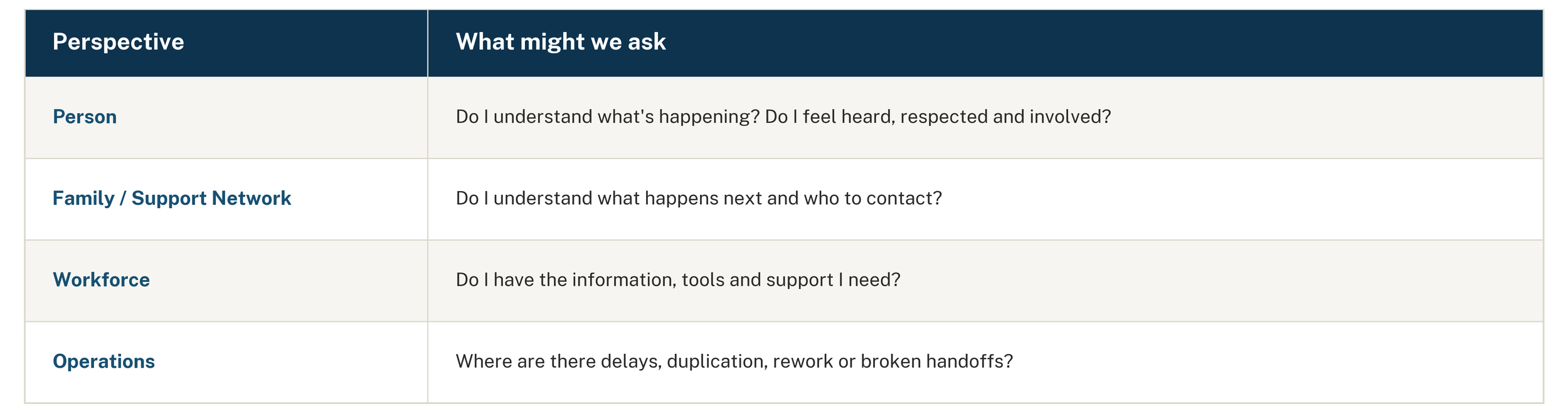
Good service design doesn't stop at identifying what should change. It considers how change can be implemented and sustained within the realities of the operating environment.
Reform, regulation, technology and service models will continue to change. Their success will be experienced in everyday moments: whether a person feels known and understood, their family or support network feels informed, workers have what they need, and the processes and systems around them make good service easier to deliver.
That is where service design can make the difference.
About the author
Angie Antzoulatos is the Founder of Filoxenia CX and a customer experience and service transformation leader with more than 20 years' experience across complex, regulated and human-centred environments, including human services, healthcare and government.
Her work focuses on helping organisations move from simply collecting feedback to understanding what matters, taking action and creating better experiences for the people receiving and delivering services.
Having worked across frontline operations and executive leadership, Angie brings a practical understanding of how customer insight, service design and operational improvement can come together to create meaningful and sustainable change.
Learn more at filoxenia.cx